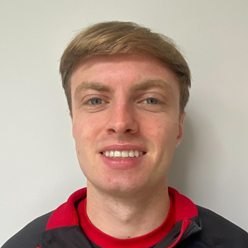
Eoin KaneFounder of READY/SET
Built by a sports scientist, not a software company.
READY/SET is a method I used every morning in an academy, turned into tools any club can run.
Eight months. Two academy squads. Every morning.
READY/SET started at Bohemians FC, where I spent eight months as a sports science intern in the academy: GPS analysis with STATSports, and strength and conditioning for squads from U14 to U20.
I built the first version from a Google Form and two Google Sheets, because that's what every club already has. The U17 and U20 squads checked in with it every morning.
The coaches didn't need more data. They needed one screen before training that said who was off their normal, why, and what to do about it.
The difference between a dashboard and a monitoring system is knowing what the numbers mean.
The app is that method rebuilt for staff. The spreadsheets live on as READY/SET Sheets, for clubs without staff.
Eoin Kane
- Sports science intern, Bohemians FC academy (eight months). GPS analysis with STATSports, S&C for U14 to U20, and daily wellness and load monitoring for the U17s and U20s.
- BSc Sport Science and Health, Dublin City University (DCU), finishing in 2027.
- Designed and built READY/SET: the method, the rules behind every status, and both products.
The protocol
Wellness decides. Load explains.
No status until there's a baseline. Then each player is judged against their own recent normal.
Modify rarely means rest. It usually means less volume or lower intensity within the session. The coach makes the final call.
How a status is worked out
A player's z-score is how far today's total is from their own average, in standard deviations.
-
Wellness first
Five answers (sleep, soreness, stress, fatigue, mood) add up to a score from 5 to 35. It's compared with that player's own previous 28 days to give Fine, Monitor or Modify.
-
Soreness and fatigue can move it up
Soreness or fatigue at 5 or more, or both at 4 or more, moves a player up one level: Fine to Monitor if the item is at least 2 above their usual, Monitor to Modify if it's above their usual. It shows as "Monitor (soreness 5/7)" or "Modify (soreness 5/7)".
-
Pain on its own terms
Pain is never averaged into the score. Every report goes to the top of the coach's screen, in red when it's severe, as a prompt to involve the physio.
-
Then check the load
For a flagged player, look at their recent load. Was it the training, or something else, like sleep, school or stress?
The science
Built on published research
Self-reported wellness, session RPE, individual baselines, traffic lights that give their reasons, and the acute:chronic ratio as one input among several.
The science in five lines, with 11 references
- Wellness. The check-in is a short self-report based on the Hooper index, with mood added.1 Self-reported measures respond to changes in training load more consistently than many objective ones.2
- Session RPE. Load is the player's rating of effort (0–10) times the minutes trained.3 It's a valid, practical measure in team sports and in football,4, 5 and a meta-analysis found a correlation of r = 0.79 with GPS total distance.6
- Individual baselines. Players respond differently to the same training,7 so each is judged against their own normal rather than one fixed cut-off for the squad.
- Traffic lights need reasons. Red, amber and green are a common way for teams to show monitoring results, but how they're set up isn't standard.8 So every READY/SET colour comes with its reason, and informs the coach's decision rather than making it.
- The acute:chronic ratio is one input among several. READY/SET uses exponentially weighted averages,9 but the research on the ratio is contested,10 so it describes load change in words and never decides a status. And it all depends on honest answers: athletes say they sometimes under-report so their performance isn't questioned.11
References
- Hooper SL, Mackinnon LT. Monitoring overtraining in athletes: recommendations. Sports Medicine. 1995;20(5):321–327.
- Saw AE, Main LC, Gastin PB. Monitoring the athlete training response: subjective self-reported measures trump commonly used objective measures: a systematic review. British Journal of Sports Medicine. 2016;50(5):281–291.
- Foster C, Florhaug JA, Franklin J, et al. A new approach to monitoring exercise training. Journal of Strength and Conditioning Research. 2001;15(1):109–115.
- Haddad M, Stylianides G, Djaoui L, Dellal A, Chamari K. Session-RPE method for training load monitoring: validity, ecological usefulness, and influencing factors. Frontiers in Neuroscience. 2017;11:612.
- Impellizzeri FM, Rampinini E, Coutts AJ, Sassi A, Marcora SM. Use of RPE-based training load in soccer. Medicine & Science in Sports & Exercise. 2004;36(6):1042–1047.
- McLaren SJ, Macpherson TW, Coutts AJ, Hurst C, Spears IR, Weston M. The relationships between internal and external measures of training load and intensity in team sports: a meta-analysis. Sports Medicine. 2018;48(3):641–658. Open-access copy.
- Hecksteden A, Pitsch W, Rosenberger F, Meyer T. Repeated testing for the assessment of individual response to exercise training. Journal of Applied Physiology. 2018;124(6):1567–1579.
- Robertson S, Bartlett JD, Gastin PB. Red, amber, or green? Athlete monitoring in team sport: the need for decision-support systems. International Journal of Sports Physiology and Performance. 2017;12(Suppl 2):S2-73–S2-79.
- Murray NB, Gabbett TJ, Townshend AD, Blanch P. Calculating acute:chronic workload ratios using exponentially weighted moving averages provides a more sensitive indicator of injury likelihood than rolling averages. British Journal of Sports Medicine. 2017;51(9):749–754.
- Impellizzeri FM, Tenan MS, Kempton T, Novak A, Coutts AJ. Acute:chronic workload ratio: conceptual issues and fundamental pitfalls. International Journal of Sports Physiology and Performance. 2020;15(6):907–913. Open-access copy.
- Coventry M, Timler A, Mosler AB, Russell K, Travers M, Mitchell L, Murphy MC. ‘I lied a little bit.’ A qualitative study exploring the perspectives of elite Australian athletes on self-reported data. Physical Therapy in Sport. 2023;60:91–97.
Talk to me
Questions about the app, the sheets or the method? I reply to every email myself.
Or email hello@readysetmonitoring.com